
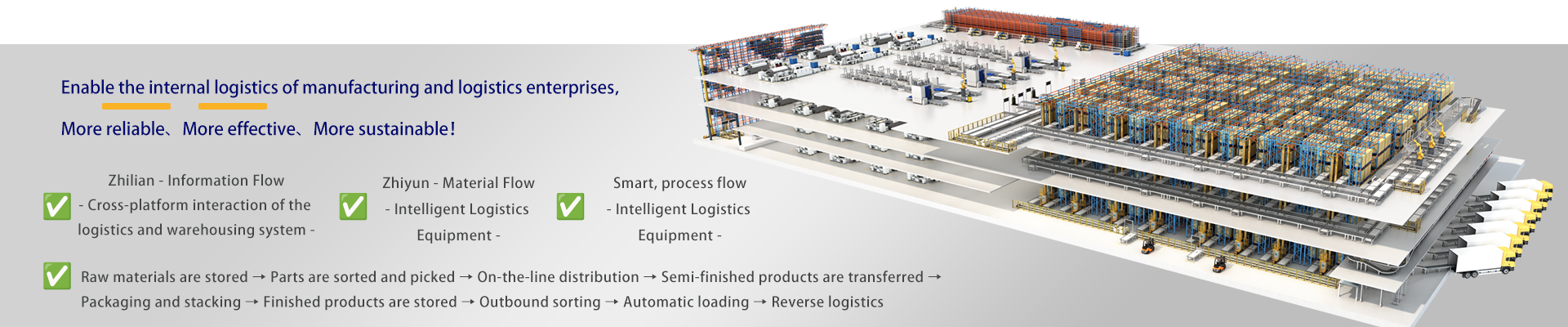
Integrating racks, stacking equipment, conveyor lines and warehouse‑management software, automated high‑bay warehouses realize automatic goods handling and intelligent scheduling while minimizing manual operations. Thanks to their high‑density storage capability, they are now widely adopted in warehousing across diverse industries. Mature and stable application scenarios have been developed tailored to the product characteristics of each sector.
Production‑oriented warehousing for smart manufacturing represents one of the mainstream use‑cases for automated high‑bay warehouses. Manufacturing and mechanical‑processing plants handle a wide variety of raw materials, semi‑finished goods and spare parts. Automated high‑bay warehouses store production materials and components. The system automatically retrieves materials according to production schedules and continuously feeds supplies to production lines, enabling seamless connection between production and warehousing. It effectively addresses common pain points including disorganized on‑site materials, time‑consuming material picking and difficult inventory control, ensuring non‑stop assembly‑line operation.
The electronics industry also makes extensive use of automated high‑bay warehouses. Electronic components are small‑sized with numerous specifications, and some impose strict requirements on storage environment and turnover cycles. Automated high‑bay warehouses accurately locate each component and complete inbound‑outbound operations rapidly, eliminating picking errors caused by manual handling. Meanwhile, high‑density storage accommodates massive volumes of small‑size items of diverse SKUs, satisfying sophisticated inventory‑management demands of electronics manufacturers.
The food and pharmaceutical industries, which demand high‑level warehousing standardization and traceability, constitute another key application field. Pharmaceutical raw materials and finished medicines require complete circulation records. Automated high‑bay warehouses log full inbound‑outbound information to meet traceability compliance requirements. For snack‑food and cold‑chain‑food enterprises, such systems prevent goods expiry and safeguard product quality through automated inbound‑outbound workflows.
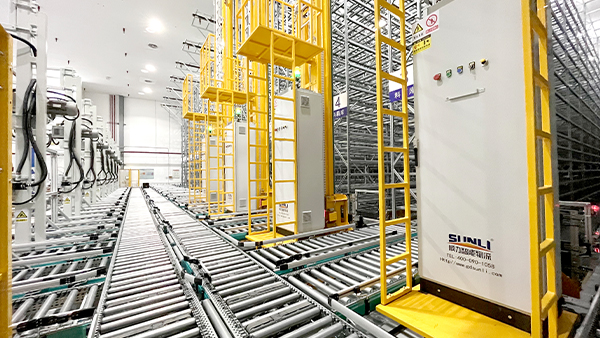
E‑commerce and modern‑logistics distribution centers are increasingly deploying automated high‑bay warehouses. Large‑scale e‑commerce warehouses and regional logistics hubs process high‑volume and high‑frequency orders. Automated high‑bay warehouses undertake mass‑goods storage and cooperate with sorting systems for fast order preparation. They accelerate order processing, cope with order surges during major sales campaigns and shorten customers’ waiting time for deliveries.
Third‑party logistics and warehousing providers commonly adopt automated high‑bay warehouses to upgrade service capabilities. Serving multiple clients simultaneously, third‑party warehouses manage diverse product ranges with refined inventory‑control requirements. Automated high‑bay warehouses support partitioned independent storage zones for different customers. Automated workflows boost warehouse throughput and help logistics providers expand warehousing‑outsourcing businesses.
The automotive industry was among the earliest sectors to popularize automated high‑bay warehouses. Vehicle manufacturers and auto‑component suppliers handle enormous quantities of spare parts. Tires, body components and standard fasteners can all be stored in automated high‑bay warehouses. The system delivers parts on‑demand to support vehicle assembly and improve overall manufacturing efficiency.
Besides the above sectors, automated high‑bay warehouses have been implemented in tobacco, furniture, new‑energy‑material and cold‑chain‑warehousing industries. Customized solutions can be adjusted according to goods dimensions, weight and turnover frequency for different scenarios.
In summary, enterprises facing frequent goods turnover, limited storage space and demands for refined inventory management may evaluate the feasibility of deploying automated high‑bay warehouses based on their actual operations. No longer exclusive to large corporations, automated high‑bay warehouses are evolving into mainstream solutions for smart‑warehousing upgrades across industries.

Scan to add WeChat