
【Topic】
Scheduling Conflicts,Exception Handling Rules,Slot Fragmentation&Fault Escape Routes:A Complete Breakdown
Technical Lead:Chai Qiuyu
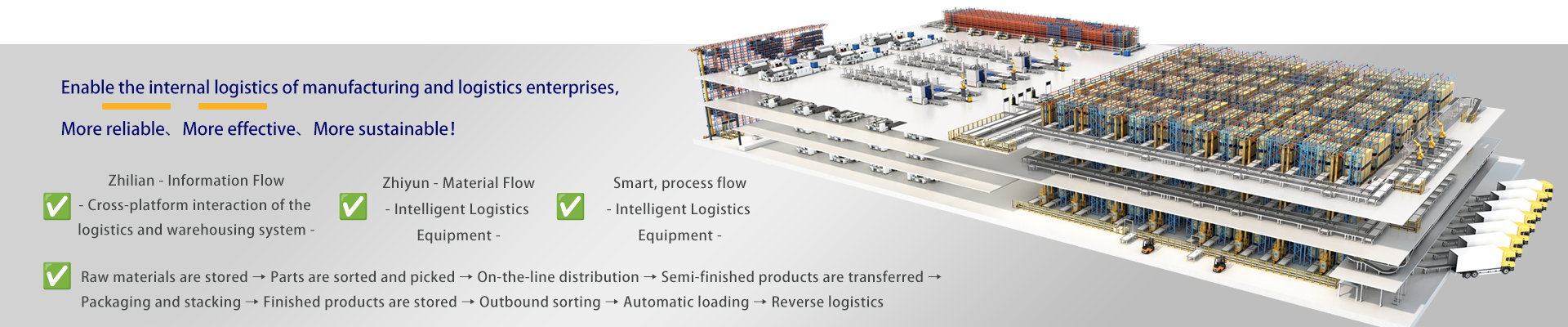
Many factories plan Automated Storage and Retrieval Systems(AS/RS)by prioritizing storage capacity,throughput and budget.The figures on paper may look impressive.Yet after project golive,congestion frequently occurs,actual output falls short of targets,and warehouse efficiency keeps declining.Worse still,a single fault may force the whole line to shut down.Such issues rarely stem from equipment defects.Instead,they arise from hidden constraints overlooked at the solution design phase:scheduling conflicts,exception contingency plans,storage slot fragmentation and emergency escape routes.Today,we take four mainstream AS/RS types—stacker crane systems,fourway shuttles,motherdaughter shuttles and Miniload systems—to unpack risks that must be anticipated in the early design stage.
In the frontend planning of smart warehouses,teams tend to lock in total slots,hourly throughput,storage capacity,site footprint and budget first.These KPIs form the foundation of the proposal.However,a common industry phenomenon persists:two proposals with nearly identical nominal parameters can deliver vastly different realworld performance after commissioning.Some warehouses run steadily longterm,while others suffer persistent congestion,slot fragmentation and frequent exceptions right after launch.
Many attribute these problems to scheduling algorithms or postlaunch commissioning.In reality,most structural weaknesses are baked in during layout and requirement definition.Once equipment arrives onsite,revising the fundamental layout becomes extremely costly,and often impossible.
Furthermore,different AS/RS types have distinct conflict sources,flexibility limits and failure risks.A universal design approach cannot be applied across the board.This article does not compare equipment quotations.It focuses on pallet stacker crane AS/RS,Miniload bin AS/RS,fourway shuttle AS/RS and motherdaughter shuttle AS/RS,discussing frequently overlooked predesign constraints beyond basic capacity metrics.
Scheduling Relies on More Than WCSConflict Boundaries Must Be Defined in Layout Design
Many layout plans are overly idealistic,assuming all equipment can travel smoothly without queuing or route contention.In live operations,inbound,outbound,replenishment and inventory counting tasks run simultaneously with limited resources,and bottlenecks vary greatly by warehouse type.
Pallet AS/RS with Stacker Cranes:Stacker cranes occupy dedicated conveying resources within aisles,so internal lane conflicts are rare.Bottlenecks usually emerge at aisle transfer stations and conveyor merging points.Layout planning must incorporate diversion on branch conveyor lines to prevent multiple aisles from discharging goods onto the same conveyor segment and creating queues.
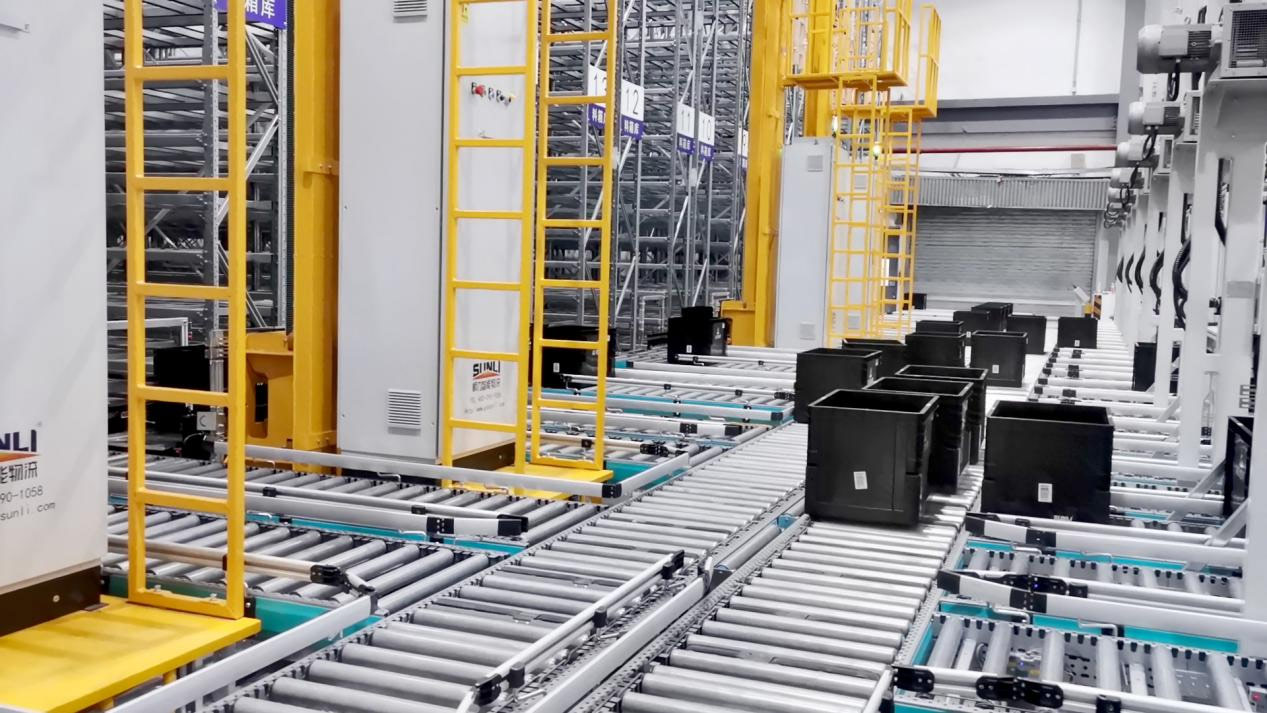
Sunli Intelligent Case:Stacker Crane AS/RS
Miniload Bin AS/RS:Bins are compact and task density is high.Congestion often occurs on conveyor lines,sorting ports and return loops.Many proposals only calculate singleunit capacity while ignoring the upper limit of downstream sorting and return handling,resulting in bin pileups and line blockages.
Sunli Intelligent Case:Bin Automated AS/RS
MotherDaughter Shuttle AS/RS:Mother shuttle tracks are shared resources.Intersections and layerchanging elevators are inherent bottlenecks.Design should cap the number of mother shuttles operating on one track at the same time and predefine traffic priority rules,rather than relying solely on scheduling algorithms for collision avoidance.
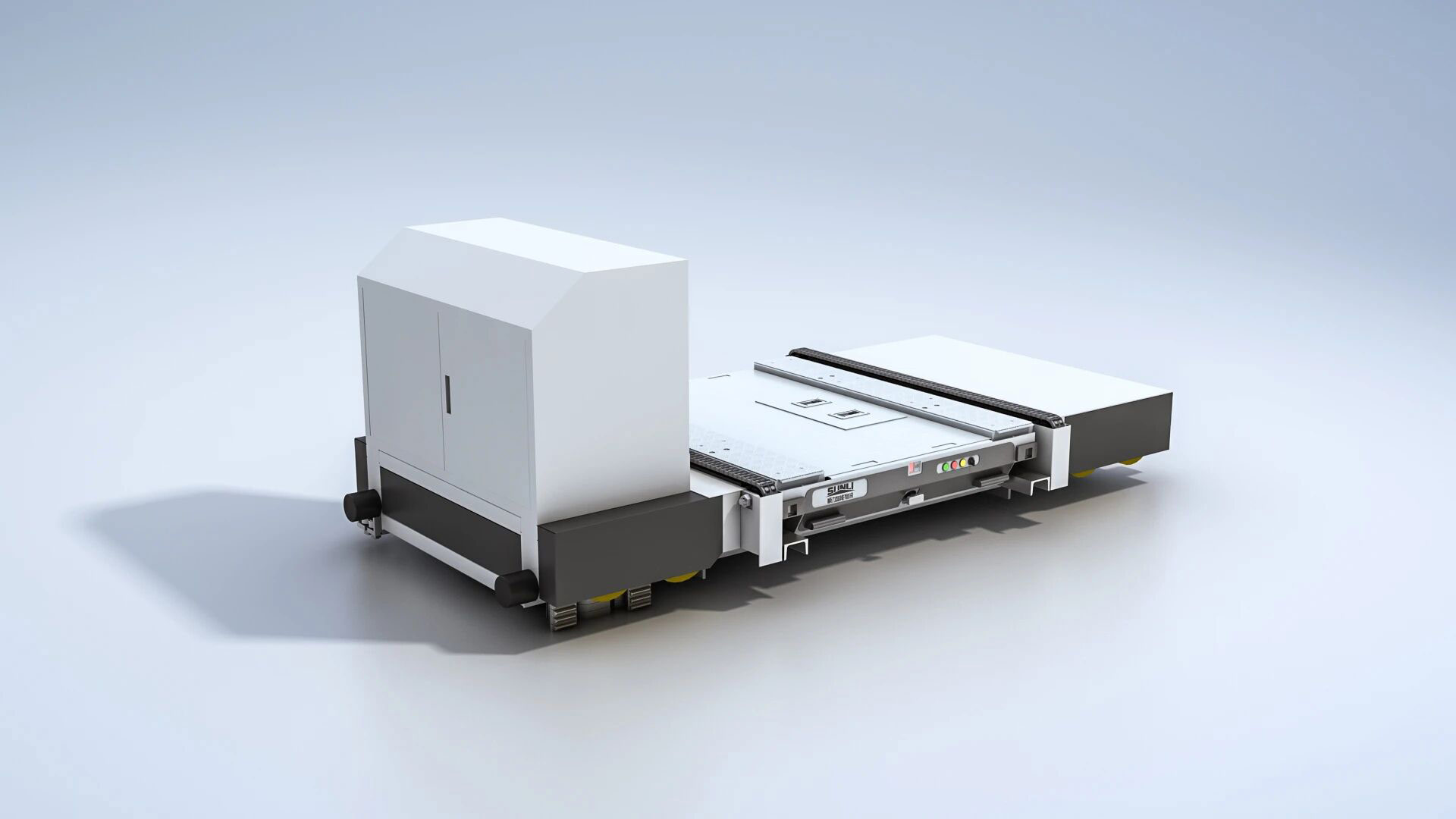
Sunli Intelligent MotherDaughter Shuttle
FourWay Shuttle AS/RS:The fully shared grid network makes this the most conflictprone system.Aisles,elevators and transfer ports are all intersection points where vehicle deadlocks easily occur.At the drawing stage,primary and secondary lanes should be designated,and sufficient buffers reserved at transfer interfaces.One stalled shuttle may paralyze a large section of the grid network.
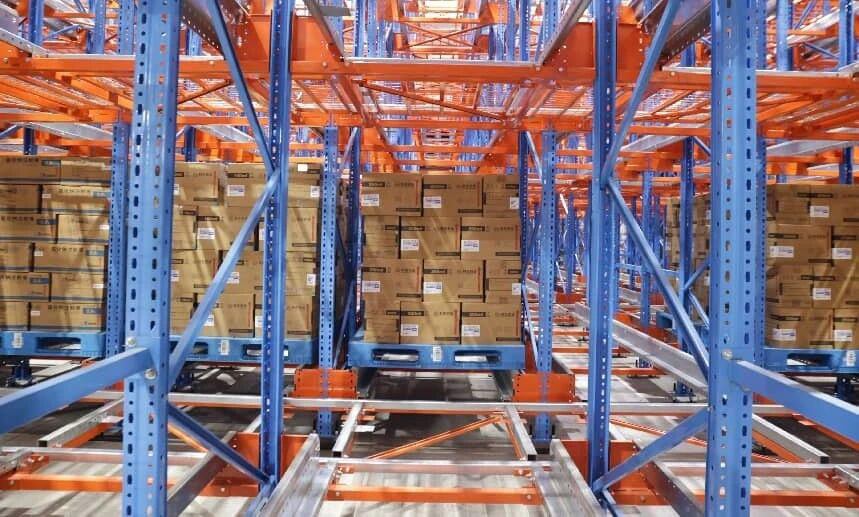
Sunli Intelligent Case:FourWay Shuttle AS/RS
Resource boundaries for rush orders and fluctuating capacity at transfer buffers should be written into the proposal upfront.Half of the ceiling of scheduling capability comes from algorithmsthe other half is determined during layout and buffer design.
##Validate Rules in Advance—Do Not Leave Exception Handling Until GoLive
Nearly all proposals specify interoperability between WMS,WCS and PLC to guarantee inventory accuracy.Yet“consistent book and actual inventory”is far more than a standalone function.It is a complete set of decision rules:when identification fails,labels are blurred,signals jitter or messages are delayed,the system needs predefined rules on which signal takes precedence and where materials should be routed.
Exception scenarios differ sharply across warehouse types:
Pallet stacker crane systems rely heavily on photoelectric sensors.Tilted,overheight or obscured cargo will trigger inbound recognition failures.Acceptance criteria and judgement logic must be defined in advance.
Miniload bin systems process massive bin volumes.Worn,reflective or unscannable labels are frequent issues.The solution must specify the destination for abnormal bins:return for rescanning or diversion to manual exception stations,to avoid cascading disruptions and repeated putaway triggered by mass error alerts.
Grid shuttle systems feature dense sensor layouts,which are vulnerable to signal crosstalk and false triggering.This leads to inventory mismatches—the system shows a slot occupied while the physical location is empty,or vice versa.Such mismatches propagate across the grid and are costly to troubleshoot later.
For regulated sectors such as pharmaceuticals and fine chemicals,all exception handling workflows must be finalized at the requirement stageadhoc adjustments onsite are prohibited.
Simply put,inventory accuracy does not depend on how many times items are scanned on putaway.It hinges on the rules activated when errors occur.Validation workflows must be documented in requirement specifications instead of being improvised by implementation engineers onsite.Minor inventory discrepancies accumulate over time,and subsequent stocktaking and correction will consume enormous manpower.
Storage Utilization≠Flexibility—Prevent Slot Fragmentation Early
Storage utilization is a key KPI for clients,yet it carries a hidden pitfall.If uniform slot sizes are adopted,once utilization hits 75%–85%,remaining vacant slots tend to be scattered small spaces that cannot fit standard pallets or bins.The nominal capacity remains attractive on paper,but actual inbound and throughput performance drops noticeably.
Fragmentation manifests differently across the four AS/RS categories:
Stacker crane AS/RS:Vacant slots scatter across aisles.Stacker cranes travel long distances to fill these gaps,dragging down overall efficiency.When handling diverse material sizes,allocate dedicated aisles for nonstandard cargo to avoid disrupting the whole aisle.
Miniload bin AS/RS:This is the most vulnerable to fragmentation.Wide SKU ranges and mixed bin heights easily generate numerous narrow,unusable gaps.Partition storage zones by bin height to reduce fragmentation at the source.
Fourway shuttle grid AS/RS:Vacancies scatter randomly across grid nodes,raising the routing cost for shuttles.Chasing high density with uniform slot specifications delivers attractive earlystage data,yet congestion and search time surge once occupancy rises.It is recommended to partition zones by turnover rate and unit size,separating fastmoving and special materials.
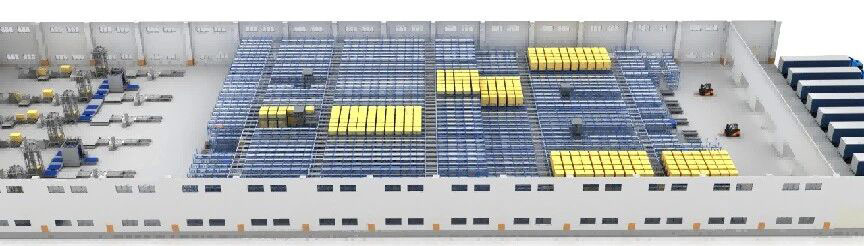
Sunli Intelligent Case:FourWay Shuttle Dense Storage System
Flexibility means more than just“support for multisize materials”.When mapping material matrices,classify storage slots:highturnover standard goods occupy highdensity slots,while irregular,fragile and lowfrequency goods are isolated in dedicated zones.Set utilization thresholds.Once the threshold is reached,the system automatically triggers relocation and consolidation to avoid saturating the warehouse and eliminating scheduling elasticity.It is similar to a wardrobe:uniform compartments look spaceefficient,but become restrictive when storing varied items.
Automation Does Not Equal Unmanned Operation—Reserve Fault Escape Routes
Many proposals sacrifice maintenance aisles and emergency picking points to add more storage slots.While automation and high density are goals,designers cannot assume zero equipment failure.Sensor drift,component wear and vehicle jamming are inevitable.Escape paths must be reserved in layout planning.
Stacker crane AS/RS:Each crane serves one aisle,offering good fault isolation.Still,maintenance space must be reserved inside aisles,and emergency pick positions arranged at aisle ends for manual or forklift intervention during breakdowns.
Miniload bin AS/RS:A single unit failure can block the entire return conveyor chain.Manual intervention stations are required on return loops to prevent full bin stagnation.
Motherdaughter shuttle AS/RS:Mother shuttles act as track hubs.If a mother shuttle fails,all daughter shuttles on the same track lose crossaisle transfer capability.Every mother shuttle track needs a fault parking zone and alternate travel paths.
Fourway shuttle AS/RS:Fault risks are hard to contain.A single jam can lock large sections of the grid.Layouts cannot rely on singlepath routingevacuation lanes must be retained,and emergency pick ports distributed across the grid instead of concentrated at one entry/exit.
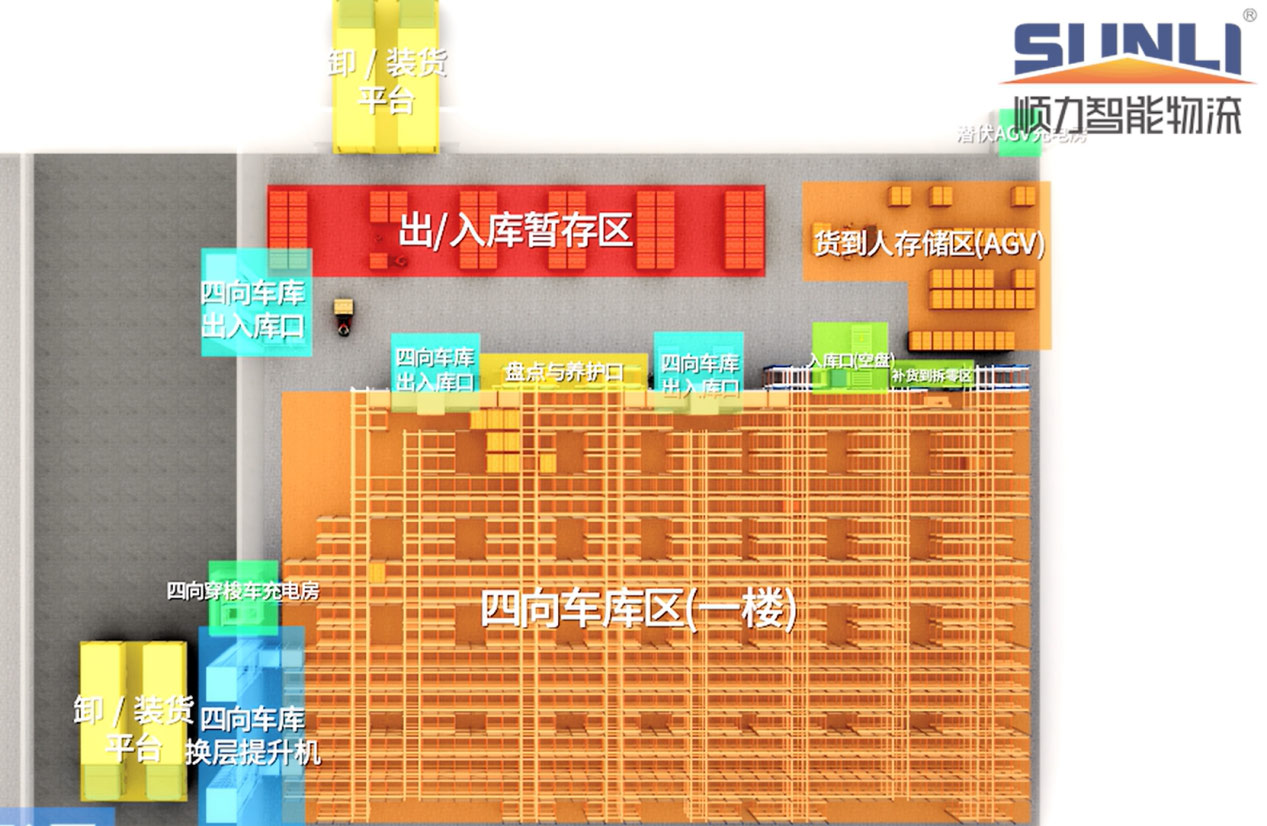
Sunli Intelligent Case:Rendering of FourWay Shuttle Dense Storage System
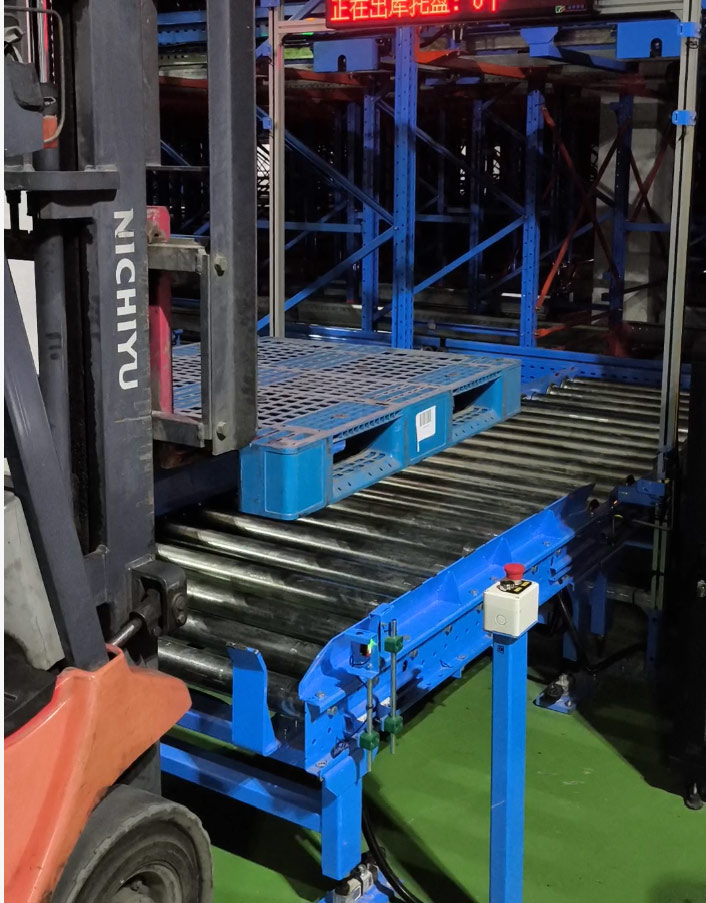
FourWay Shuttle Dense Storage System(Manual Loading&Unloading Ports
In its solution design,Sunli Intelligent incorporates dedicated extraction paths for faulty pallets and bins,maintenance access points and forklift emergency docking ports for AS/RS.Minor exceptions such as scan failures are handled automatically by system retries or manual diversion.Full warehouse shutdown is only activated for critical failures.Preventing small faults from spreading is the core guarantee of stable operation for Sunli Intelligent automated systems.
Conclusion
Traditional warehouse planning starts with throughput calculation,layout arrangement and software/hardware selection.Our recommended approach is to define exception boundaries,fragmentation risks and fault isolation rules before locking in KPIs.These serve as the underlying constraints for the whole solution.
Stacker cranes deliver stable performance and are ideal for bulk pallet storage.Miniload systems suit small bins and splitcase picking.Motherdaughter shuttles excel at dense storage for projects with high inventory volume.Fourway shuttles offer outstanding flexibility to adapt to variable materials and layouts.
When reviewing proposals,besides checking core metrics such as capacity and throughput,evaluate operational resilience:does the design include congestion mitigation strategies?Can faults be isolated locally?Can the system sustain stable output under longterm mixedstorage conditions?
A solution’s resilience against business fluctuations and emergencies originates from early planning.When designs are tailored to business characteristics at the drawing stage,the warehouse can maintain reliable longterm operation.

Scan to add WeChat