
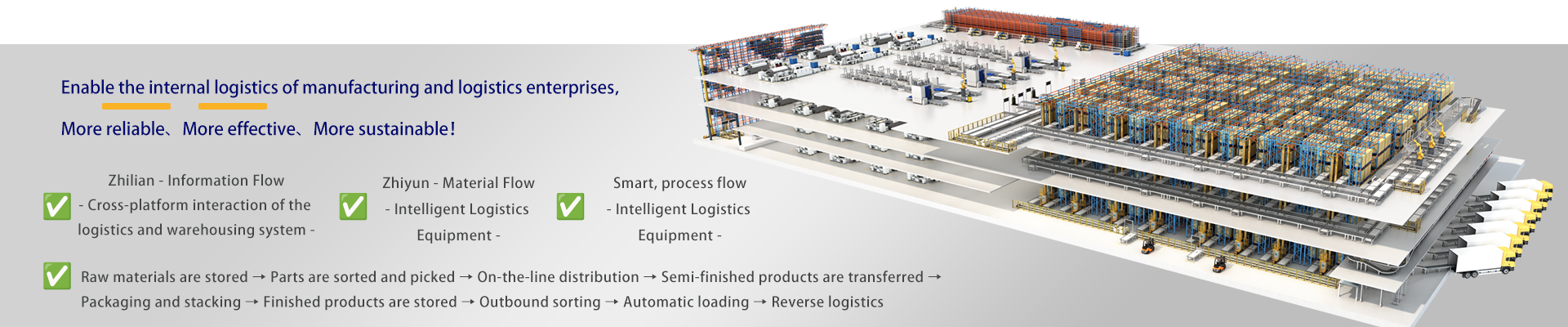
Mobile:13631707130
Email:marketing@dgsunli.com
Tel:400-090-1058
Website:www.gdsunli.com
Address:No. 115, Gaojiu Section, Beiwang Road, Gaobu Town, Dongguan City, Guangdong Province
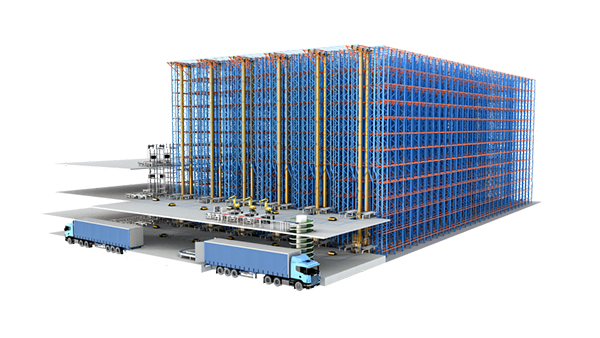
Automated high‑bay warehouses are widely deployed across various industries thanks to mechanized access and high‑density storage. Nevertheless, not all goods are suitable for storage inside. Product specifications, forms and storage requirements directly determine whether goods can adapt to the operating mode of automated high‑bay warehouses.
Standardized unit‑loaded goods are the primary category compatible with automated high‑bay warehouses. Industrial spare parts, finished packaged goods, plastic raw materials, electronic components and other items loaded on standard pallets or bins feature regular shapes and consistent weights, which facilitate gripping and positioning by stacker cranes. They represent the most commonly stored goods today. Standard packaged finished products from food and daily‑chemical industries are also well‑suited for high‑bay warehouses given uniform dimensions and sturdy outer packaging, enabling large‑volume cyclic inbound and outbound operations.
Goods requiring long‑term constant‑temperature storage and strict batch control are excellent candidates. Pharmaceutical raw materials, packaged medicines and certain fine‑chemical raw materials usually demand strict segregation of production batches and expiry dates. Automated high‑bay warehouses lock dedicated storage locations and follow the FIFO (First‑In‑First‑Out) principle to avoid manual batch‑mix‑up risks. For cold‑chain applications, standardized cold‑chain goods can be stored in a regulated and continuous manner within temperature‑controlled automated high‑bay warehouses.
Materials with frequent high‑volume turnover are also ideal candidates. Manufacturing raw materials, semi‑finished products and standardized parcels in large‑scale e‑commerce warehouses generate heavy daily handling workloads. Automated equipment supports non‑stop operation to boost turnover efficiency.
By contrast, irregular over‑sized items, fragile goods without fixed packaging, free‑flow bulk materials, and leak‑prone products with highly variable dimensions are generally not suitable for direct storage in automated high‑bay warehouses. During goods‑selection planning, unit‑loading standards shall be unified and outer packaging optimized to guarantee stable stacker‑crane performance and realize the full value of automated high‑bay warehousing.

Scan to add WeChat