
【Topic of This Issue】
Picking‑by‑order? Sorting‑after‑batch? Zone‑based Picking?
Picking Strategy Selection: Footwear & Apparel E‑commerce vs Pharmaceutical Distribution
Technical Contributors: Shi Jian, Ding Liang
Plenty of materials about picking strategies are available on the market. Most of them merely list definitions, pros and cons of three picking modes: pick‑by‑order (fruit‑picking method), batch picking (sort‑after‑batch method) and zone‑based picking. Yet few clarify how to select strategies for different business scenarios, or why batch sorting works for some warehouses but is not feasible for others.
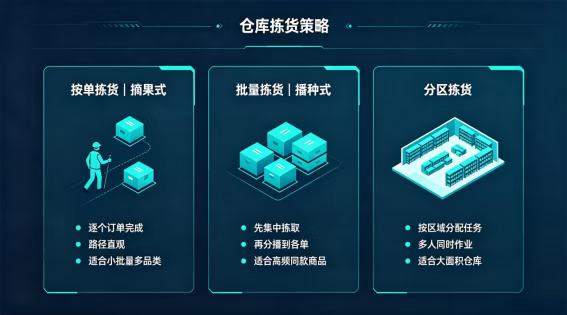
How should you identify the right picking strategy? Simply put, analyze your order profiles, product characteristics and industry‑specific constraints and regulations, and the answer will become clear. Taking two representative automated logistics scenarios — footwear & apparel e‑commerce and pharmaceutical distribution — this article focuses on pick‑by‑order, batch picking and zone‑based picking, discussing their applicable scenarios and trade‑offs.
Scenario 1: Footwear & Apparel E‑commerce
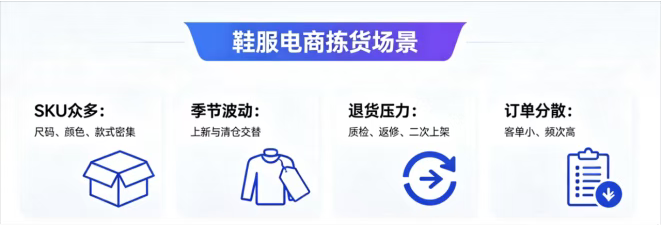
Footwear & apparel e‑commerce features massive SKUs, strong seasonality, high return rates and fragmented orders. Order volume surges sharply during major shopping festivals such as 618 and Double 11, placing high requirements on throughput and flexibility of picking systems.
1. Pick‑by‑Order (Fruit‑picking Method): Rarely Used in Daily Operations, Only for Special & Urgent Orders
This mode is seldom adopted for regular orders. Given numerous SKUs and fragmented orders, pick‑by‑order requires operators to travel across the entire warehouse, leading to low efficiency. It is only applied to VIP rush orders and pre‑sale orders. These orders are small‑volume but time‑critical. Operators can follow system‑optimized short paths to pick goods with handheld scanners, processing them as priority tasks without waiting for the next wave.
2. Batch Picking (Sort‑after‑batch Method): Core Mainstream Mode
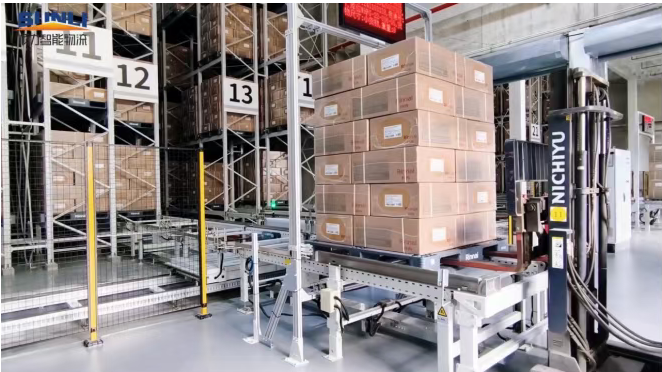
This mode is widely deployed in footwear & apparel e‑commerce. For instance, a best‑selling garment may appear in thousands of orders during 618. The system consolidates these orders into one wave. Pickers collect goods in batches and then sort them to individual orders at the sort wall. Nevertheless, batch picking brings heavy pressure on secondary sorting. Therefore, large‑scale footwear‑apparel warehouses are usually equipped with sort walls, light‑directed picking systems and AGV goods‑to‑person solutions. Without such supporting equipment, sorting cost and error rate will rise drastically amid sales spikes. Batch picking plus automated sorting is the prerequisite for handling volatile order peaks.
3. Zone‑based Picking: Fundamental Approach to Reduce Travel Waste in Large Warehouses
Zone‑based picking serves as the basic picking mode for footwear & apparel e‑commerce. Warehouses in this industry often span tens of thousands of square meters, making zoning necessary. Fast‑moving SKUs are placed near the front area while slow‑moving items are stored further in the back according to sales heatmaps. However, zone‑based picking suffers from uneven workload: high‑turnover zones are heavily loaded whereas low‑turnover zones see few outbound tasks. Apart from dynamic manpower allocation, many large warehouses deploy AGV goods‑to‑person systems in high‑activity zones to eliminate long “person‑to‑goods” travel. In this case, zoning also improves automated handling efficiency.
Scenario 2: Pharmaceutical Distribution
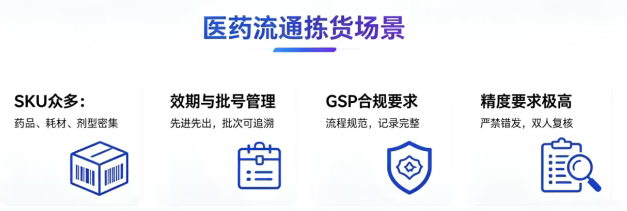
Pharmaceutical distribution is characterized by abundant SKUs, mandatory batch‑number and expiry‑date management, strict GSP compliance requirements and diverse order structures. High picking accuracy is mandatory to prevent mis‑shipment.
1. Pick‑by‑Order (Fruit‑picking Method): Optimal for Broken‑case Outbound
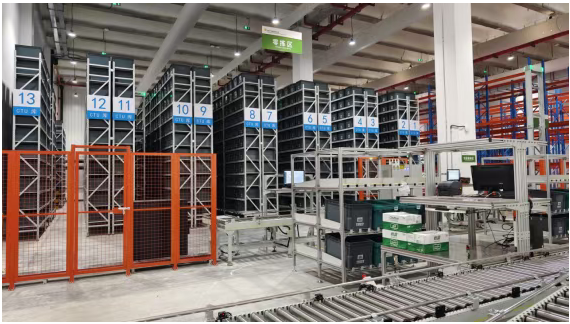
It is the primary picking mode for broken‑case sections in pharmaceutical distribution. For example, one pharmacy may order dozens of different medicines in small quantities each. Operators pick item‑by‑item per order and scan for verification. Why not adopt batch picking? Batch numbers must be strictly managed: different batches of the same drug cannot be mixed. Under such circumstances, pick‑by‑order is not merely an efficiency option but a compliance safeguard. Operators scan each item with handheld terminals; the system enforces FEFO (First‑Expired‑First‑Out) sequencing. Although travel distance increases, picking accuracy is guaranteed. Automation brings considerable value here. CTU or Miniload box‑type AS/RS enable high‑density storage and order‑based case supply, combined with digital picking systems (DPS) in picking zones. Such mainstream solutions boost efficiency while securing accuracy.
2. Batch Picking (Sort‑after‑batch Method): Limited Application, Only for Full‑case Outbound
Batch picking is rarely used in pharmaceutical distribution and is basically limited to full‑case outbound scenarios. For instance, when the same‑batch medicine needs to be delivered to ten hospitals, the system generates a wave to retrieve ten full cases at one time for shipment. It is hardly applied in broken‑case areas due to batch‑mixing risks mentioned above. Forced wave generation would create huge difficulties in batch differentiation during subsequent sorting and endanger accuracy. For facilities with large and stable full‑case outbound volume, a combination of shuttle‑based AS/RS and automatic labelers can greatly enhance operational efficiency.
3. Zone‑based Picking: Fundamental Approach Balancing Mandatory Compliance and Picking Efficiency
Zone‑based picking is also fundamental for pharmaceutical distribution, yet for different reasons from footwear‑apparel e‑commerce. Zoning is enforced for compliance purposes to prevent cross‑zone stock mixing across functional zones: ambient‑temperature warehouse, cool warehouse, refrigerated warehouse, frozen warehouse, injection area, oral‑medicine area and other dedicated zones with special management rules. Efficiency is another consideration. Frequent travelling between zones wastes significant time; for example, picking in frozen zones requires putting on and taking off anti‑freeze protective garments.
Core Conclusion: The Best Strategy Is the One That Fits
From the two scenarios above, let’s summarize how the three picking strategies are applied in these two industries.
Strategy | Footwear & Apparel E‑commerce | Pharmaceutical Distribution |
Pick‑by‑Order | Seldom Used | Widely Used |
Batch Picking | Widely Used | Seldom Used |
Zone‑based Picking | Widely Used | Widely Used |
Combined Picking Strategy | Batch picking + Zone‑based picking + AGV goods‑to‑person | Pick‑by‑order + Zone‑based picking + Scan‑and‑verify |
As illustrated in these two industry cases, picking strategies are not mutually exclusive. They can be organically combined for different product groups within one warehouse.
Back to the initial question: how to select suitable picking strategies? You may follow the analytical logic in this article. Conduct accurate business analysis by clarifying order profiles, product features and customer requirements. Once these three dimensions are well understood, the solution will emerge naturally.
There exists no universally superior strategy, only well‑adapted strategy combinations. Identifying such combinations and implementing corresponding automation capabilities will deliver synergy achieving greater‑than‑sum performance.

Scan to add WeChat